
What Is an Infrared Sauna Dome? Construction, Heating, and Controls
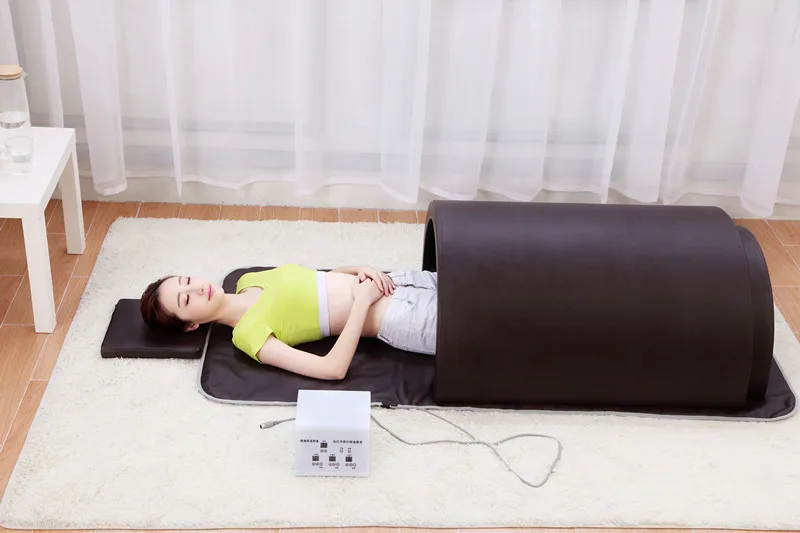
An infrared sauna dome is a rigid or semi-rigid, tunnel-shaped heat enclosure used while lying down, usually with the head outside. Often called a lying-down FIR capsule, it places heating surfaces around the body without requiring a walk-in wooden room. A full-size model can suit a spa treatment bed or a dedicated home corner; a Mini model serves a smaller area. The appeal is practical: head-out comfort, broad heat coverage, and a smaller installed footprint than a sauna cabin. Whether it is the right choice depends on its dimensions, control design, cleaning workflow, and the space available between sessions. Explore commercial-grade specifications and customizable dome configurations in our Infrared Sauna Dome product line.
Structural Engineering and Ergonomic Design
Nested dome shells and support frame
Many full-size domes use two arched shell sections that slide or nest together. Pull them apart for a session, then overlap them to reduce the stored length. This is a useful layout for treatment rooms, but it is not the same as a fold-flat product: the curved shell still needs a storage area. Check both the open and nested dimensions before planning a room. FITKANG lists standard full-size models at approximately 180 × 80 × 45 cm and a Large model at approximately 180 × 90 × 55 cm; final dimensions belong to the selected model’s specification sheet.
A rigid frame helps the opening keep its shape and supports the upper heating assembly. The frame and shell must tolerate repeated sliding, cleaning, and transport without exposing wiring or creating sharp edges. For a professional sauna dome, ask how the shell sections are joined, how cables are routed at moving edges, and what parts can be replaced.
Surface materials and insulation
The exterior may use PU-covered panels over a supporting structure, while the inner surface is designed for wipe-down cleaning. FITKANG also lists a wooden variant, so PU is not universal across the range. Material claims such as “eco-friendly,” “non-toxic,” or “waterproof” should be tied to the exact material grade and test report. The heating assembly needs electrical insulation and thermal protection between the elements, frame, and user-facing surface. A wipe-clean lining improves routine sanitation, but users must still follow the model’s cleaning instructions and never immerse electrical parts.
Head-out comfort
The open end keeps the user’s face in room air. A soft neck curtain or drape can reduce warm-air loss without pressing tightly on the neck. Fit matters: an opening that is too loose loses heat, while an overly tight seal feels uncomfortable. The head-out design can feel more spacious than a wrap-style blanket, yet users should be able to exit easily without assistance.
Heating Elements and Mineral Stone Linings
How surround heating works
A far infrared sauna dome uses electrical heating elements in the curved shell and, on selected models, a heated base mat. FITKANG describes carbon-fiber heating and one-, two-, or three-zone configurations across its range. “360-degree heating” is a useful description of upper and lower coverage when both shell and base heat; it should not be read as a measured promise of perfectly uniform temperature at every point. Ask for a surface-temperature map and the position of each sensor if uniformity is a purchasing requirement.
The user is separated from the upper shell by an air gap, so the top heating surfaces do not press directly on the skin. That can reduce pressure-related hot spots compared with a direct-contact pad. It does not eliminate heat risk: the base mat may contact the body, and shell surfaces can still be hot. Actual exposure depends on element output, distance, airflow, insulation, clothing or towels, and session time.
What mineral stones change
Some FIR sauna dome models integrate tourmaline, germanium, jade, or Bian stones in the shell or base mat. Once heated, these materials can retain and release thermal energy, like other warmed solids. Their type, count, thickness, and placement also change weight, appearance, cleanability, and price. A claim that a particular mineral creates a superior therapeutic wavelength or medical outcome needs product-specific optical and clinical evidence. Treat stone inlays as a design option first, then evaluate measured heating performance separately.
Heating Controls and Safety Systems
Independent zones
Multi-zone controls let the user set separate heating areas instead of driving the entire unit at one output. A three-zone configuration may split the upper shell, lower shell, and base mat, but zone layout varies by model. FITKANG’s range includes Mini single-zone and full-size multi-zone products. For selected full-size models, the dome setting range is 25–90°C (77–194°F), while the mat may have a separate 25–80°C (77–176°F) range. These are controller settings, not a guarantee that the air inside or the user’s skin reaches those temperatures.
When comparing sauna dome heating controls, ask whether the display shows a target setting, sensor reading, or both. Confirm each zone’s sensor location, power rating, adjustment steps, and how the controller responds if a sensor fails. Independent control is most useful when it is matched by independent monitoring and a clear operating manual.
Timer, preheat, and protective cutoffs
A session timer and automatic shutoff make operating time easier to manage. Some systems offer preheating, but the time needed to warm up depends on room temperature, voltage, model size, and target setting. Do not assume a universal 1–60 minute timer or “rapid” preheat specification; request the exact controller sheet. Overheat protection should interrupt power when a limit is exceeded. Buyers should verify how that cutoff was tested, how the unit resets, and whether the base mat has separate protection.
“Low EMF” should be supported by measurements for the exact operating configuration, including the test position, distance, units, and voltage. CE and RoHS documentation also needs to match the model, electrical version, and destination market. A logo on a brochure does not establish that every custom configuration has passed the same checks.
Infrared Sauna Dome vs. Sauna Blanket
Both products provide compact, lying-down heat sessions, but their mechanical designs lead to different tradeoffs. A dome creates an open air space around the torso; a blanket wraps the body closely. The dome’s rigid shell may be easier to wipe between clients, although its seams and base mat still need attention. A blanket stores in less space and is usually simpler to move. A dome generally requires more storage room and a higher initial investment, especially with multiple zones or mineral inlays.
| Feature / spec | Infrared sauna dome | Infrared sauna blanket |
| Structure | Curved shell over a lying-down user; head-out opening | Flexible wrap around the body; head usually outside |
| Heating style | Upper air-gap heating; selected models also heat from base mat | Close-contact heating through the blanket layers |
| Controls | One to three zones depending on model; shell and mat may differ | Single or multiple zones depending on model |
| Footprint | Needs floor or treatment-bed space and shell storage | Folds or rolls for smaller storage footprint |
| Best use case | Fixed home setup or repeated spa and studio sessions | Portable home use or limited storage space |
The table describes typical designs, not every product. Compare actual dimensions, electrical ratings, materials, and cleaning instructions before buying.
Choosing a Dome Specification
– Measure the room: Include the open dome, nested storage length, cable routing, and space for safe entry and exit.
– Match the user and application: Check internal width and height, base-mat comfort, neck opening, and whether one or several users will share the equipment.
– Verify heating performance: Request rated power, zone map, controller ranges, sensor locations, temperature-uniformity data, and cutoff behavior.
– Check commercial upkeep: Ask for approved cleaners, drying time, replaceable parts, and the cleaning process between clients.
– Match documents to the order: Confirm the exact voltage, plug, model revision, labels, and applicable compliance reports before production.
Conclusion
An infrared sauna dome combines a shaped enclosure, controlled electric heating, and a head-out layout in a smaller installation than a wooden sauna cabin. Rigid construction, an optional heated base, mineral inlays, and independent zones can support different product tiers, but the benefit of each feature should be judged by its measured performance and the intended setting. Review FITKANG’s model specifications, request an OEM/ODM configuration discussion, or ask for sample and wholesale pricing based on your target market and room requirements.
Have More Custom OEM or Technical Questions?
FITKANG provides turnkey contract manufacturing and custom engineering for global wellness brands. Talk with our team to request technical datasheets, sample terms, and volume pricing.


Leave a Reply