Red Light Blanket vs. Panel: Which One Is Right for You?
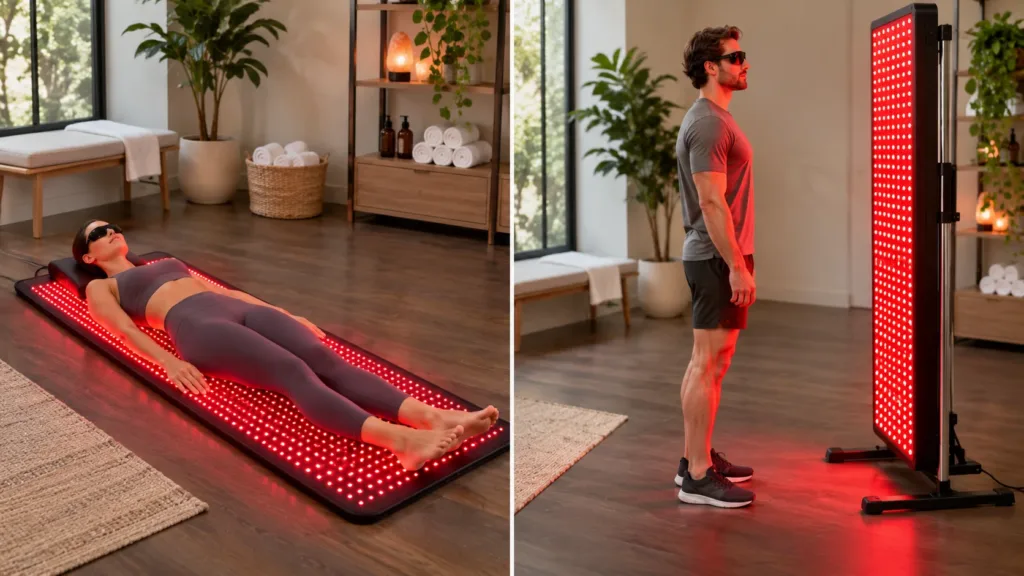
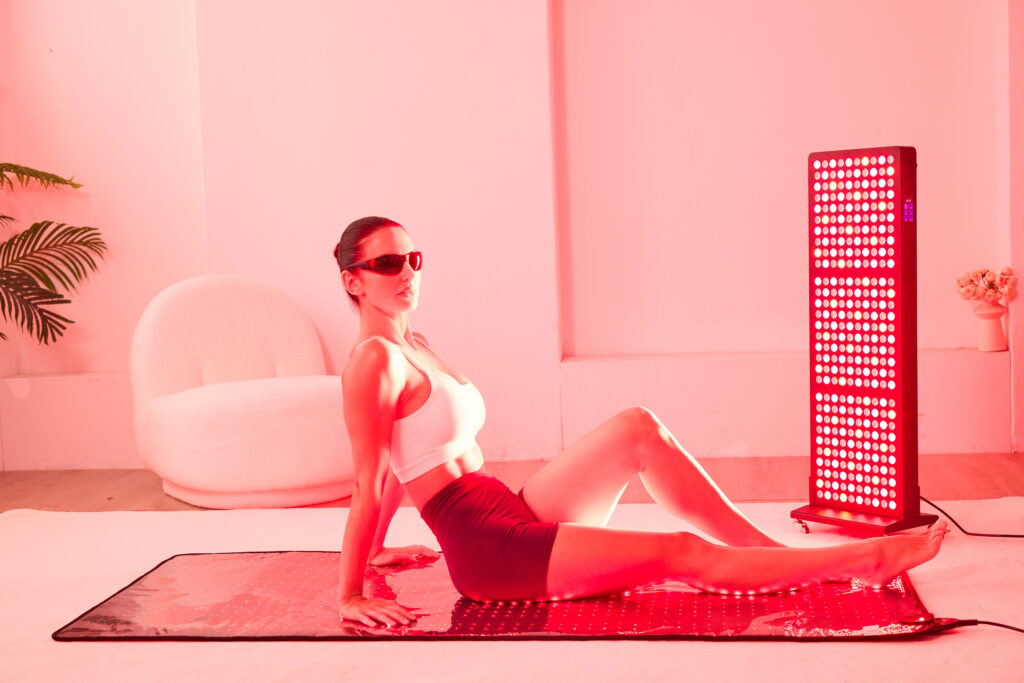
A red light blanket or mat is built for broad, comfortable coverage while the user lies down; a panel is built for directional exposure, often with higher output over a selected area. A flexible mat can store in a cabinet and position LEDs close to the body. A rigid panel can be easier to aim at the face, shoulder, or another target and may suit a dedicated standing or seated station. Neither design is automatically more effective. The outcome depends on the light dose actually delivered to the intended tissue, the wavelength, session protocol, and user adherence.
That distinction matters to both home buyers and studio operators. “660 nm and 850 nm” on two cartons does not make the devices interchangeable. The best choice is the one whose measured output, coverage, cleaning workflow, and space requirements fit the job.
Red Light Blanket vs. Panel: Quick Comparison Table
| Feature | Red light blanket or mat | Red light panel |
| Form factor | Flexible mat or wrap; some models fold for storage | Rigid housing; may need wall, door, or floor mounting |
| Light distance | Near-contact or contact where the design permits | Specified distance from LEDs, often several inches |
| Power and irradiance | Output must be measured at the skin-facing surface | Output must be measured at the recommended distance |
| Body coverage | Flat mat covers one side; wrap can surround more of the body | Directional exposure; turn body or use multiple panels |
| Portability | Easier to pack, subject to fold limits and controller size | Less portable, especially with a stand |
| Best fit | Reclining full-body routine or treatment table | Upright station or targeted face and body sessions |
This is a design comparison, not a performance ranking. A near-contact mat does not have “zero light loss”: fabric, LED optics, skin contact, folds, and positioning can all affect delivered light. Likewise, a panel’s marketing irradiance number is useful only when the measurement distance and method are stated. Huikang offers professional red light therapy mats, wraps, and panels for different coverage and sourcing needs.
5 Key Differences Between a Red Light Blanket and a Panel
1. Power Output, Irradiance, and Near-Contact Use
The most common buying mistake is comparing a panel’s peak mW/cm² rating with a mat’s LED count. Those numbers describe different things. Irradiance is optical power reaching a unit of area at a stated position. The energy delivered over a session also depends on exposure time. A useful specification includes wavelength, irradiance map, measurement distance, area, and the operating mode used in the test.
A panel’s light spreads as distance increases, so measured irradiance can change substantially between a few inches and a foot away. A mat is positioned close to the body, which can reduce distance-related spread. But contact does not guarantee a superior dose: some LEDs may sit behind a cover, others may point away from curved areas, and body pressure can change the gap. A device study found large changes in LED exposure as distance varied, illustrating why a single rating cannot predict every use position. Home-use PBM device study.
More power is not always better. Photobiomodulation research describes dose-dependent responses, and excessive exposure need not improve outcomes. Compare delivered light under realistic conditions rather than choosing the largest advertised number. PBM dose guidance.
2. Body Coverage and Session Experience
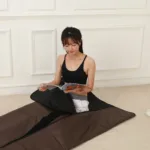
A full-body mat can deliver light to the body-facing side while the user lies down. A wrap-style blanket can place emitters around more of the torso and limbs, but “360-degree coverage” should be checked against its actual LED map and the areas that remain uncovered. A panel lights the surfaces facing it; a user may turn around for another side or use several panels in a dedicated setup.
The experience differs as much as the optics. A mat suits a quiet reclining routine and can be integrated into an existing treatment bed. A panel leaves the body free of fabric contact and lets the user stand or sit. The common 20–30 minute blanket and 10–15 minute panel examples are not interchangeable protocols. Appropriate time depends on measured irradiance, distance, intended area, and the instructions for the specific model.
3. Setup, Space, and Storage
A flexible mat can be put away after it cools and is cleaned, which helps a shared room serve several purposes. Measure its folded size, controller, power supply, and carrying case, not just the open mat. Follow the maker’s fold lines; tight creases can stress LED circuits and connectors.
A panel needs stable mounting and a clear operating distance. A wall-mounted unit saves floor area but fixes the treatment location. A wheeled stand offers movement within a studio but adds cost, storage volume, and a trip hazard if cords are poorly routed. For B2B use, map the entire service: where the client changes position, where staff operate the controller, and how the station is reset between bookings.
4. Cleaning, Maintenance, and Hygiene
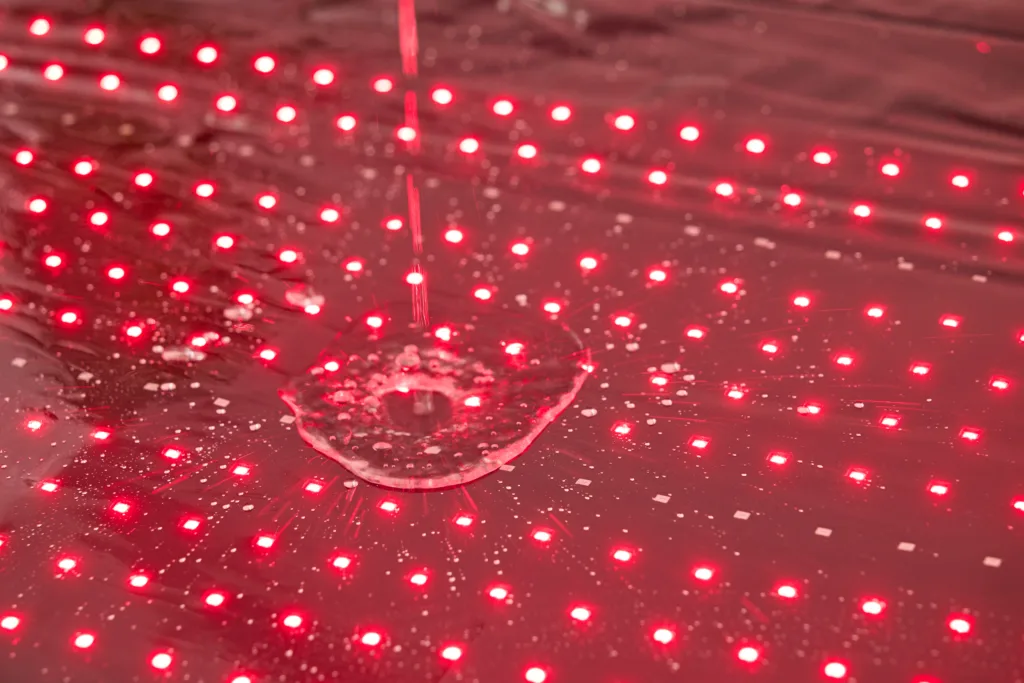
Body-contact products face the stricter cleaning workflow. A mat or wrap needs a user-facing material that tolerates the approved wipe-down method; seams, closures, and cable entries require inspection. Never assume “waterproof” means the complete electrical assembly can be immersed. A washable liner may simplify turnover if the model supports one.
Panels usually avoid direct body contact, so exterior cleaning may be faster. Their lenses, ventilation openings, stand joints, and power connections still need attention. If a panel uses cooling fans, keep the manufacturer’s airflow clear and follow its maintenance instructions. Ask for cleaning compatibility and expected replacement parts for both formats before buying for a gym or spa.
5. Upfront Cost and Scalability
Price depends on size, LED density, wavelengths, controller, housing, optical power, and included accessories. A single mat may be simpler to add to an existing treatment table, while a small panel may be the lower-cost route for a targeted service. Full-body panel coverage can require a larger panel, multiple units, and mounts. A wrap may need more cleaning time and replacement of flexible components over its service life.
Compare the total cost of a usable station: equipment, installation or stand, electrical supply, cleaning supplies, spare parts, and staff time. Wholesale buyers should request warranty terms and a repair plan for LED strings, controllers, power supplies, and fabric or housing components. The cheapest unit price is rarely the whole answer.
Which One Should You Choose? Home and Commercial Scenarios
Choose a red light blanket or mat when lying-down comfort and broad coverage are priorities, storage space is limited, or a spa wants to convert a treatment table into a light-session station. A mat is especially useful for a repeatable reclining setup. A wrap may offer more surrounding exposure, but verify which body areas actually face LEDs. Travel suitability depends on packed weight, voltage, and fold durability; a full-body product is not automatically lightweight.
Choose a panel when the intended area is the face or another defined body region, users prefer no fabric contact, or a gym can dedicate an upright station. Panels can be repositioned for different areas, but operators must maintain the tested distance and angle. “Ten minutes” is not a universal panel session length.
Consider both when a studio offers separate reclining and targeted workflows. Keep the protocols distinct and avoid adding doses without a reason. Huikang’s full range of red light therapy products includes flexible full-body formats and light panels; request model sheets before deciding which service each one can support.
What to Look for in Quality Hardware
Both styles need credible specifications. 660 nm red and 850 nm near-infrared are common configurations, but verify the shipped model’s spectrum. Request irradiance measurements at the intended use position, an exposure map across the area, and clear instructions for time and distance. Look for a controller that reliably limits session time and identifies the selected mode.
If low EMF or flicker-free performance is advertised, ask for the test method, measurement position, operating mode, and results. Inspect cable strain relief, connectors, electrical ratings, and regional plug configuration. For a mat, assess the skin-contact material and flex life; for a panel, inspect housing stability, optics, cooling, and mounting. Ask for safety and compliance documents that identify the exact model and market rather than relying on a generic badge.
Frequently Asked Questions: Red Light Blanket vs. Panel
Are red light therapy blankets and mats as effective as panels?
They can be effective for a well-defined purpose, but equivalence cannot be inferred from contact or LED count. A panel may deliver higher irradiance at its specified distance; a mat may provide close, broad coverage. Whether either delivers a suitable dose depends on the actual optical measurements, use position, exposure time, and desired outcome. Ask for model-specific evidence before calling them equally effective.
Can you use a red light blanket and a panel together?
Yes, if each device is used according to its instructions, but more exposure is not automatically more beneficial. A studio might offer a reclining full-body format and a separate targeted panel session. It should document the devices, settings, and timing rather than stacking two protocols casually.
Do red light blankets get hot like infrared sauna blankets?
Usually no. A standard LED red light blanket is designed to deliver visible red and near-infrared light, with some incidental warmth. An infrared sauna blanket uses heating elements to create a much stronger heat and sweating experience. Some combination products include both functions; check whether heating can be controlled separately and follow the specific safety instructions.
Sourcing Custom Red Light Blankets and Panels for Your Business
There is no universal winner in a red light blanket vs. panel comparison. A mat or wrap can serve a relaxed, broad-area session and store compactly; a panel can serve a defined area with controlled distance in an upright station. The business decision rests on measured light delivery, user positioning, room turnover, maintenance, and the claims the device can responsibly support.
Huikang offers flexible and rigid red light formats and OEM/ODM options. Studio owners, retailers, and brand partners can request model-specific wavelength and irradiance data, cleaning instructions, compliance files, sample terms, and wholesale pricing. Those documents make a stronger sourcing decision than a headline about raw power or “zero-distance” use.
Have More Custom OEM or Technical Questions?
FITKANG provides turnkey contract manufacturing and custom engineering for global wellness brands. Talk with our team to request technical datasheets, sample terms, and volume pricing.
Leave a Reply